
Who hasn’t heard the sobering and discouraging statistic that almost 50 percent of marriages will end in divorce? And who isn’t aware of how easy it has become to obtain a divorce?
As I was growing up in the 1960s and 1970s, I knew very few couples who divorced, and I knew of less than five students in my high school graduating class of about 170 students whose parents had divorced. Four decades later I believe it would be rare to find a classroom without at least one student whose parents had divorced and quite possible to find a student whose parents had cohabited.
In 1980, I was a normal teenage girl who dreamed of finding the young man I would marry and be with forever. Of course, I expected to be happily married. Data from “Monitoring the Future,” a nationally representative survey of high school seniors conducted annually by the Institute for Social Research at the University of Michigan, covering the years beginning 1976 to 2010, reveals that marriage was an important goal for most high school seniors (2012). Specific beliefs about marriage revealed by the data collected from in the survey included that:
- Approximately 80 percent of high school senior girls and approximately 70% of high school senior boys believed that having a good marriage was extremely important.
- The percentage of high school seniors who believed or expected to remain married to the same person for life decreased from 68.0 to 61.8 percent for girls and from 57.3 to 56.3 percent for boys.
- The percentages of high school seniors who agreed or mostly agreed with the statement, “It is usually a good ideas for a couple to live together before getting married in order to find out whether they really get along” increased from 32.3 to 63.4 percent for girls and from 44.9 to 69.2 percent for boys. (p. 96-103)
This data demonstrates a steady loss of confidence and hope in our young people for the success of marriage. You could also say the data translates to a growing expectation of failure.

When my husband and I got engaged, he had just graduated law school and he bought me a lovely but modest ring. Then, when we reached our 10 year anniversary, he took me shopping for a more substantial ring to both supplement my modest wedding ring and to mark our achievement. It was evident to us at that time that many marriages were ending before even reaching the five year mark. To us, the ring symbolized the idea that while any couple can get married, a successful marriage is created through commitment and constant effort by husband and wife. We did not consider divorce an option.
While we were correct in believing that successful marriages require commitment and effort, according to “The State of Our Unions: Marriage in America 2012,” there are other factors that decrease the risk of divorce, one being social, but the remaining factors are personal. This means that individuals can control these factors through their own actions and choices. The factors listed in the publication and their effects are:
- Family of origin intact (vs. divorced parents), a 24% decreased risk – the social factor
- Annual income over $50,000 (vs. under $25,000) results in a 30 % decreased risk of divorce
- Having a baby seven months or more after marriage (vs. before marriage), a 24% decreased risk
- Marrying over 25 years of age (vs. under 18), a 24% decreased risk
- Religious affiliation (vs. none), a 14% decreased risk
- College (vs. high school dropout), a 25% decreased risk of divorce (p. 74)
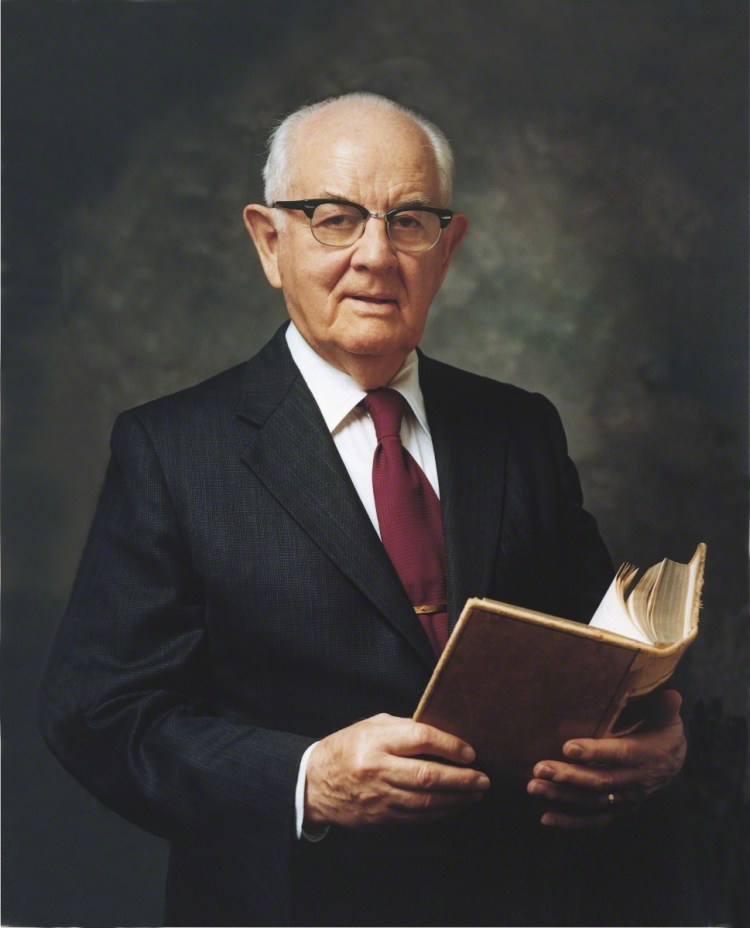
Perhaps the best advice for inspiring confidence in our ability to create a lasting marriage comes from Spencer W. Kimball, a past president and prophet of the Church of Jesus Christ of Latter-day Saints (1973-1985). Even though members of this church believe that marriages performed in their temples can be eternal, their success still takes commitment and effort. In a talk titled “Oneness in Marriage,” President Kimball (1977) provides counsel applicable to all couples. He advised:
There is a never-failing formula which will guarantee to every couple a happy and eternal marriage; but like all formulas, the principal ingredients must not be left out, reduced, or limited. The selection before courting and then the continued courting after the marriage process are equally important, but not more important than the marriage itself, the success of which depends upon the two individuals—not upon one, but upon two. … but the marriage depends first and always on the two spouses who can always make their marriage successful and happy if they are determined, unselfish, and righteous.
The formula is simple; the ingredients are few, though there are many amplifications of each.
First, there must be the proper approach toward marriage, which contemplates the selection of a spouse who reaches as nearly as possible the pinnacle of perfection in all the matters which are of importance to the individuals. And then those two parties must come to the altar in the temple realizing that they must work hard toward this successful joint living.
Second, there must be a great unselfishness, forgetting self and directing all of the family life and all pertaining thereunto to the good of the family, subjugating self.
Third, there must be continued courting and expressions of affection, kindness, and consideration to keep love alive and growing.
Fourth, there must be a complete living of the commandments of the Lord as defined in the gospel of Jesus Christ.
With these ingredients properly mixed and continually kept functioning, it is quite impossible for unhappiness to come, misunderstandings to continue, or breaks to occur.
Each party must eliminate the “I” and the “my” and substitute therefore “we” and “our.” (p. 40-45)
It’s important to note that the statistic stating that almost 50 percent of marriages will end in divorce is merely a prediction, and just like the weather, subject to changing conditions. Let us all act with confidence and let those changing conditions be the way we conduct ourselves in our marriages. While we can’t control the actions and choices of others, we can control our own, and we can drive that statistic downwards.

Sources
Kimball, S. W. (1977, March). Oneness in marriage. Ensign, p. 40-45.
National Marriage Project and Institute for American Values. (2012). State of our unions: Marriage in America. Charlottesville, VA. University of Virginia.
 Kirsten's marriage blog