I’m going to be honest and say this right now. I believe that marriage means the union of a man and a woman and I don’t believe it should be redefined to include unions of same-gender couples. Now, before labeling me as a bigot and closing your mind to anything more I have to say on this very sensitive subject, please let me share my thoughts and feelings about why I feel this way.

First, please allow me to share a few facts about myself. I have always wanted to become a social worker, and many of my social views are more liberal than conservative. One of my goals is to become an advocate for the rights of others. Personally, I don’t understand racial or ethnic prejudices, or prejudice directed towards a person because of gender or towards those who are homosexual. In my teens, two of my closest and dearest friends were guys who later “came out” when they were in their twenties. Both have long-term partners. I am still in contact with one of these friends and last summer, I traveled out of my way to spend a wonderful half day catching up with him when he was back visiting family. I am one of the few friends from his youth that he is comfortable keeping in contact with. I am Canadian, my husband is American, and we have three children. I am planning to take out citizenship but have been waiting until I felt ready. And, as posted on my home page, I am an active member of the Church of Jesus Christ of Latter-day Saints.
One of the factors convincing me to take out U.S. citizenship has been the right to vote and have my voice heard in government. However, the 2015 decision of the Supreme Court justice majority in Obergefell v. Hodges, which overturned the voice of the people in the many states who chose to ban same-sex marriage, left me feeling cheated. Not only did the justices overstep their judicial authority by acting as a legislative body in legalizing same-sex marriage, I feel they trampled the rights of voters to voice their will in government. Much of the reasoning of the dissenting four justices was based on these factors, and I agree with them. The only the real constitutional right violated in connection with this Supreme Court decision was that of the voting public. It leads me to question the benefits of citizenship.
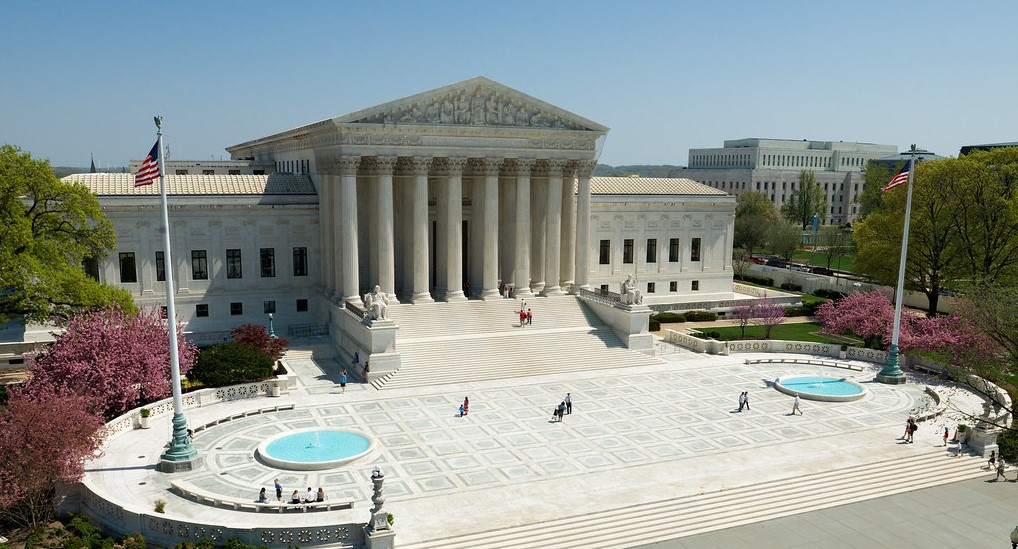
I already explained that I have a close friend who is gay, and he and I have discussed his sexual preference, his emotional needs, and the benefits his same-sex relationship provides. I believe there is a universal need to love and be loved, even if I don’t understand same-gender attraction. The budding social worker in me sympathizes with people who experience same-sex attraction because I recognize that they desire a connection that provides security and intimacy. Much of the reasoning given for overturning state bans on same-sex marriage was centered around the desires of the petitioners to enjoy the benefits of legally recognized marriage relationships. However, the States bans on same-sex marriage never restrained the petitioners from participating in their same-sex relationships. As stated by Justice Roberts in his dissent, “Same-sex couples remain free to live together, to engage in intimate conduct, and to raise their families as they see fit. No one is “condemned to live in loneliness” (p.17-18).
The majority argued that several aspects of marriage have changed over time, but as Justice Roberts stated in his dissent, “The majority may be right that the “history of marriage is one of both continuity and change, but the core meaning of marriage has endured” (p. 8). It has always been, in every known society, a union of a man and a woman. Again, the social worker in me feels real concern over the decision of the majority to, in fact, change the core meaning of marriage through their ruling. In our modern society where the family is already suffering from social changes which have resulted in the destabilization of marriages, families, and family life, the majority has introduced a factor which could bring about even greater instability and disintegration. This possibility was recognized and pointed out by Justice Alito in his dissent. He stated:
“The family is an ancient and universal human institution. Family structure reflects the characteristics of a civilization, and changes in family structure and in the popular understanding of marriage and the family can have profound effects. Past changes in the understanding of marriage—for example, the gradual ascendance of the idea that romantic love is a prerequisite to marriage—have had far-reaching consequences. But the process by which such consequences come about is complex, involving the interaction of numerous factors, and tends to occur over an extended period of time. “We can expect something similar to take place if same-sex marriage becomes widely accepted. The long-term consequences of this change are not now known and are unlikely to be ascertainable for some time” (p. 5).
While crowds cheered and celebrated the announcement of their decision, down the road when the consequences of the majority decision become clear, it may very well turn out that annals of history will not treat these five justices so kindly.
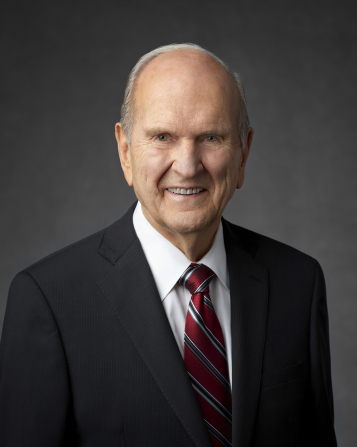
Finally, the most important reason for my opposition to same-sex marriage originates with my religious convictions. I believe that we are all children of a loving God, and that marriage is His gift to us. As stated by Elder Russell M. Nelson, one of the twelve apostles of the Church of Jesus Christ of Latter-day Saints, in his August 2014 commencement speech given at BYU:
“[God] ordained marriage as the union of a man and a woman. Marriage was not created by human judges or legislators. It was not created by think tanks or by popular vote or by opt-quoted bloggers or by pundits. It was not created by lobbyists. Marriage was created by God.
“True intimacy, as planned by our Creator, is experienced only within the sacred union of a husband and wife because it is enriched by truth and ennobled by the honoring of covenants a husband and wife make with each other and with God. …
“Social and political pressures to change marriage laws are resulting in practices contrary to God’s will regarding the eternal nature and purposes of marriage. Man simply cannot make moral what God has declared to be immoral. Sin, even if legalized by man, is still sin in the eyes of God” (2014).
Even though I love my friend and care about his feelings, I don’t condone his lifestyle. But that doesn’t mean I reject him. As taught by Elder Nelson, supported by the truths we know about God’s plan for marriage, we are to not only proclaim our love to God, but we are to, “Proclaim [our] love for all human beings “with malice toward none, with charity for all.” They are our brothers and sisters. We value their rights and feelings. But we cannot condone efforts to change divine doctrine. It is not for man to change” (2014). I’m grateful that my friend has not challenged the meaning and purpose of marriage. He was raised to respect marriage as a union of a man and a woman and I know that he is not alone in the LGBT community.
So, left with the choice of accepting the definition of marriage decided by five persons whose expertise lies not in social policy but in law, or accepting the historical definition established in the very beginning by God who created marriage in the first place, there’s no contest. I choose God’s definition of marriage.
Sources
Nelson, R.M. (2014, August). Disciples of Jesus Christ – Defenders of marriage. BYU Speeches, BYU. https://www.google.com/url?q=https://speeches.byu.edu/talks/russell-m-nelson_disciples-jesus-christ-defenders-marriage/&sa=D&ust=1579947346422000&usg=AFQjCNHQP5UgVodPJDvoOJFVby0a1W9yGA
Supreme Court of the United States. (2015). Obergefell v. Hodges. Author. https://www.google.com/url?q=http://www.supremecourt.gov/opinions/14pdf/14-556_3204.pdf&sa=D&ust=1579947346421000&usg=AFQjCNFw7-rXy2kv3rqUDA1ip0g1dUlHSw
 Kirsten's marriage blog