Several years ago, my husband’s extended family held a reunion at a dude ranch in Colorado. I was overjoyed that I could enjoy daily horseback riding activities. Before heading out on one ride, the guide warned the riders to keep their horses reined in because if one horse started to run it would cause other horses to follow suit and it would be difficult to regain control. Inevitably, one young member of our group acted against the counsel and prompted his horse to run. Some of the horses followed, my feisty mare included. During those frightening few minutes speeding over rough terrain, I was more concerned with my own safety than that of my horse, and the thought came into my mind that I might be better off just giving up and falling off, and letting the horse go riderless. But eventually, by pulling back on the reins and turning the horse’s head away from the direction she was galloping, I regained control, calmed my mare, and enjoyed the rest of the ride. The incident caused by the “rogue horseman” left me scratched up from tree branches and a little shaken up, but it could have turned out so much worse if I had given in to my panicked thoughts and allowed myself to fall off to escape the situation instead of acting to turn it around.
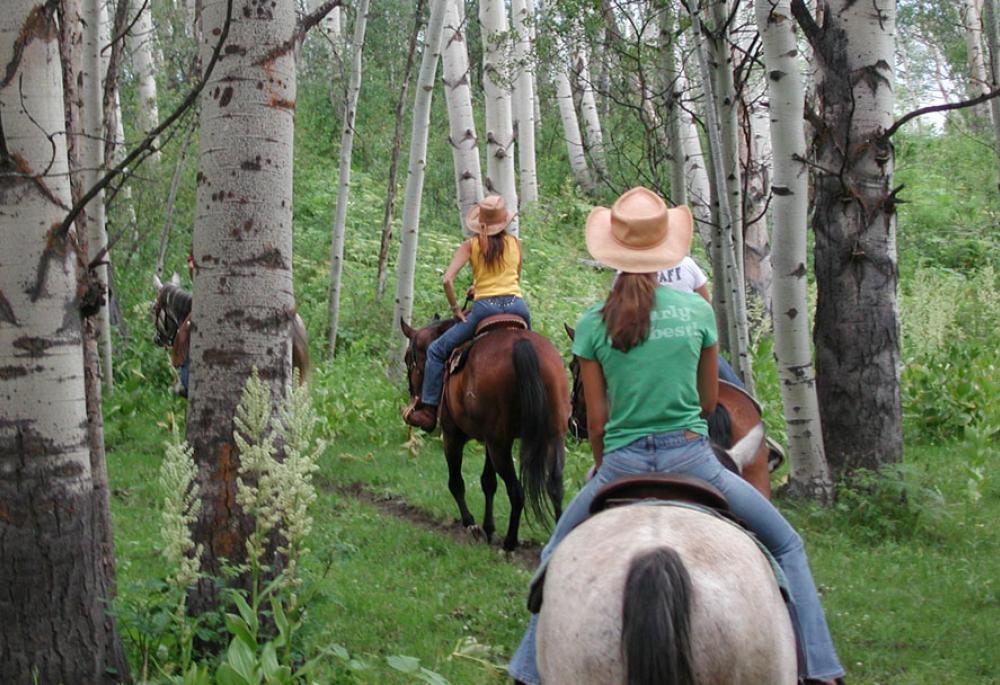
This story can be related to the escalation of conflicts in marital relationships. Marriages can experience their own rogue “horseman” that can harm a spouse, damage the marital relationship, and potentially, lead to marital breakups unless the horsemen are reined in.
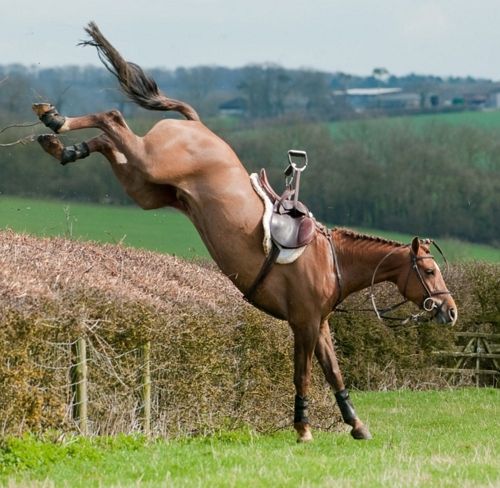
Psychologist and relationship expert, Dr. John Gottman, and his colleagues conducted extensive studies on couples, which resulted in his expertise in predicting divorce in couples with 91 percent accuracy after only 15 minutes of observation. The signs he looks for are not expressions of anger but the ways in which a couple argue.
In his book, “The Seven Principles for Making Marriage Work,” Gottman describes the first sign as the way an argument begins, whether it begins in a negative and accusatory manner. As the argument continues, the second sign is signaled by what Gottman describes as “certain kinds of negativity,” which, “if allowed to run rampant, are so lethal to the relationship that [he calls] them the Four Horseman of the Apocalypse” (2015, p.32). He describes the horsemen and the order of entrance as:
- Horseman 1 – Criticism – a global attack expressing negative feelings about a person’s character or personality
- Horseman 2 – Contempt – an expression of disrespect and superiority over another person, including sarcasm and cynicism
- Horseman 3 – Defensiveness – a way of blaming the partner, serves to escalate the conflict
- Horseman 4 – Stonewalling – one partner tunes out and becomes unresponsive, usually appearing later in the course of a marriage (p. 32-39).
The four horsemen are followed by the third sign called “flooding,” which means that the spouse, feeling psychologically and physically overwhelmed, focuses on protecting himself or herself from further attacks. This involves “[disengaging] emotionally from the relationship” (2015, p. 40).

There are effective ways for couples to rein in the four horsemen, preventing them from inflicting damage to the marital relationship.
Gottman explains that “a secret weapon for ensuring . . . arguments don’t get out of hand . . .” is by “using a repair attempt”, which “refers to any statement or action – silly or otherwise – that prevents negativity from escalating out of control” (2015, p. 26-27). However, he also explains that the success or failure of repair attempts is determined by “the strength of [the couple’s] marital friendship” (2015, p. 27). Gottman explains that it is the strength of the friendship shared by the couple that is the foundation of a happy marriage. He lists the important qualities of the relationship as:
- feelings of “mutual respect for and enjoyment of each other’s company”
- intimate knowledge of “likes, dislikes, personality quirks, hopes, and dreams
- an abiding regard for each other”
- and expressions of fondness in both the big ways and by small gestures (2015, p. 21).
The positive feelings they have for each other override and prevail over any negative feelings that may arise. This comes “courtesy of their mutual understanding of each other on a core emotional level” which Gottman calls “connection attunement” (2015, p.24). This increases the likelihood that repair attempts will work when conflicts arise and escalate.

I believe there is one more effective way to rein in the four horsemen in marital relationships, and that is by acting with spiritual maturity, by changing our hearts. In relating the scriptural account of the Samaritan to marriage relationships, H. Wallace Goddard, author of “Drawing Heaven into Your Marriage,” explained:
“This kind of response does not come easily to humans. In fact, I think it is fully impossible for us – unless we are filled with Jesus. We cannot “love [our] enemies, bless them that curse [us], do good to them that hate [us], and pray for them which despitefully use [us], and persecute [us]” (Matt. 5:44) unless we have been changed by Him.
“Most of the time we exact an eye for an eye and a tooth for a tooth. Yet you can probably think of a time when you have responded to ugliness with graciousness, kindness, love, and compassion. It feels good. We can see Him working through us! We are blessed to have Him at the helm of our lives.”
“The surest test of our spiritual maturity is the way we react to those who are imperfect physically, spiritually, or emotionally. How do we react when someone attacks and blames us? Do we defend ourselves at all costs? Do we try and be fair and balanced? Or do we, like Jesus, recognize that ugliness is often an expression of pain? Do we minister with love and patience? Do we bring healing to the injured?” (2009, p. 30-31).
By all means, we need to work to strengthen our marital friendships and use repair attempts to rein in the horsemen and prevent arguments from escalating out of control. But, in addition, let us remember and follow the example Christ provided of acting in patience and love towards those who attack or blame us. Let us look for ways to heal the pain being expressed by unkind words. Let us change our own hearts first.

Sources
Goddard, H.W. (2009). Drawing heaven into your marriage. Joymap Publishing
Gottman, J.M., & Silver, N. (2015). The seven principles for making marriage work, 2nd ed. Harmony Books.
 Kirsten's marriage blog