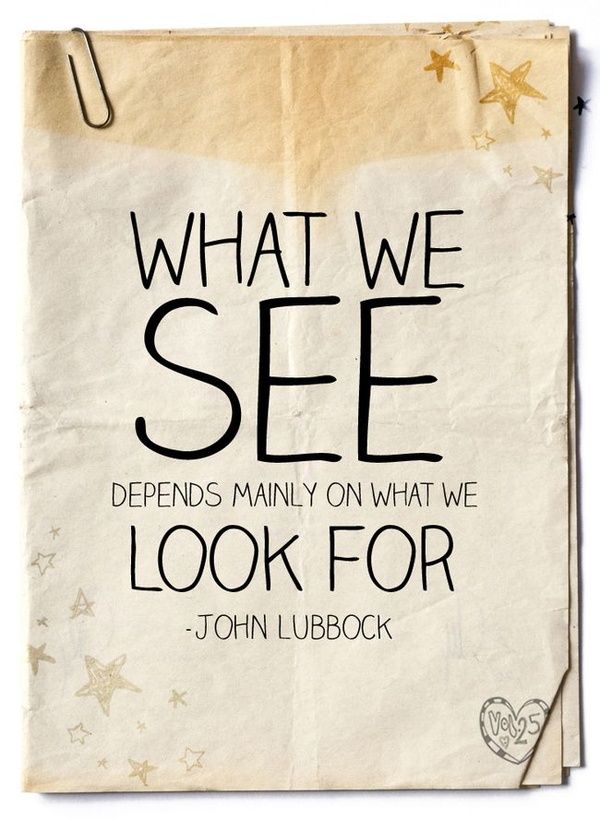
“You find – or you see – what you are looking for.” That is a saying I have heard many times, and I have experienced for myself that it is true in many situations in life. If we choose to look for the positive, we will find it, and if we look for the negative, we will find that, too. This is even commonplace in marriage relationships, and it affects how one spouse sees the other spouse. If a spouse has the wrong attitude and is looking for the wrong things, he or she will find them, and it can weaken and eventually destroy the relationship.
In a talk titled “Father Come Home” (1993), Elder James E. Faust, an apostle and counselor in the First Presidency of the Church of Jesus Christ of Latter-day Saints, shared a saying that “we should keep our eyes wide open before marriage and half shut afterward” (para. 12). Elder Faust further stated that “True charity ought to begin in marriage, for it is a relationship that must be rebuilt every day” (para. 12). This is how we can add to and strengthen the relationship that we began while courting.

None of us are perfect, and we should understand that. When couples are dating, they tend to see one another with gentler eyes, and faults are diminished by the excitement of blossoming love. I’ve heard this described as viewing the person through rose-colored glasses. Everything feels easy and fun. Then, after the marriage, things change. The glasses are removed, and those little faults become sources of irritation and judgment. H. Wallace Goddard, author of “Drawing Heaven into Your Marriage” (2009) describes how this occurs:
“This change may be most evident in our expectations. Often we hold our partner to some set of mythical standards (which are both unreasonable and unexpressed!). Inevitably he or she falls short. We feel discontent. We judge our companion as flawed and inferior. Over time this subtle discontent grows into the cancerous assurance that our partner is fatally flawed. With time we can easily convince ourselves that the marriage was a mistake” (p. 42).

Our unmet expectations can be a source of unhappiness in marriage. Bruce C. Hafen, a leader in the Church of Jesus Christ of Latter-day Saints and author of “Covenant Hearts” (2012), quoted the answer of Marjorie Hinckley, wife of President Gordon B. Hinckley, (the prophet for the Church of Jesus Christ of Latter-day Saints), to the question of the secret of her happy marriage. Her simple reply was “I lowered my expectations” (p. 74).
Goddard (2009) shares a remedy to the damage unmet expectations can invite into marriage relationships. He states:
“The cure for cancerous expectations is humble submission – a broken heart and a contrite spirit. This mindset helps us to be better appreciators and more willing learners. If we listen carefully and learn humbly about our partners’ points of view, we will be enlarged and enriched” (p. 43).

I appreciate how Goddard mentions “our partners’ points of view.” When one spouse thinks about how his or her expectations remain unmet due to the flaws of the other spouse, does that spouse consider how his or her own set of flaws that fail to meet the expectations of the other spouse? Does he or she consider how the other spouse feels about those flaws?
I appreciate my husband and I’m grateful for his attitudes towards my flaws in our marriage. He is endlessly patient and kind. When I look anything but my best, he calls me beautiful. When he comes home to chaos created by one of my projects that proved bigger and more time consuming than anticipated, he commends me for my efforts and offers to make dinner. He overlooks that I frequently neglect switching the water from the shower head to the tub spout, even when he gets sprayed by cold water in the morning. He doesn’t berate me for frequently running late. He avoids making any comments that are focused on my flaws. I can’t say the same about myself. I nitpick the little negatives such as his stubborn cowlicks that need further taming, little messes he leaves in his wake, the socks in the laundry that are inside out, and spots he misses when he washes the dishes when I should be focused on the fact that he washes the dishes!

The fact is that thinking positively about our spouse requires constantly choosing to look for the things that validate positive beliefs and ignoring the things that contradict those beliefs. This is an attitude we need to cultivate in our marriages every day to strengthen our love and admiration for our spouse. Dr. John Gottman, author of “The Seven Principles for Making Marriage Work” (2015), explains:
“. . . fondness and admiration can be fragile unless you remain aware of how crucial they are to the friendship that is at the core of any good marriage. By simply reminding yourself of your spouse’s positive qualities – even as you grapple with each other’s flaws – you can prevent a happy marriage from deteriorating. The simple reason is that fondness and admiration are antidotes for contempt” (p. 71).

When two people marry, they each bring differences with them. It is unrealistic to believe that traditions, expectations, assumptions, and ways of life will all line up perfectly. Problems build up when we apply value judgements to the differences. The best thing we can do is sacrifice our expectations and commit to learning how to accommodate our differences and create something better together. To do this involves changing our hearts and our minds. Goddard (2009) shares a quote by Doug Brinley about preparing our hearts to act with kindness and respect:
“When people are upset and angry, they are blind to any position but their own. … when people are happy, they communicate adequately. . . . Rather than looking at marriage as a skill issue, let’s consider it as a heart matter. Most adults communicate quite well with other adults when their hearts are soft and they respect one another” (p. 50).
In preparing our minds, Goddard advises that we need to “anticipate that there will be challenges in our relationships and be committed to responding in new and better ways. … Make a new plan. . . . mentally rehearse the new reaction. . .” and when “we [don’t] do it perfectly right away. . . . we may need to apologize and ask our spouse for patience as we learn to do better” (p. 51).
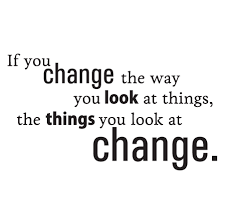
As we work to change our heart and mind towards the challenges in our relationships, our character will strengthen as we learn to respond more charitably. The things we view as flaws in our spouse may not change, but with a changed heart and mind, we may find that our perception changes and our marriages become happier. It is true that we see what we are looking for, but it is also true that if we change the way we look at things, the things we look at change.
Resources
Faust, J.E. (193, May). Father come home. Ensign. para. 12.
Goddard, H.W. (2009). Drawing heaven into your marriage. Joymap Publishing
Gottman, J.M., & Silver, N. (2015). The seven principles for making marriage work, 2nd ed. Harmony Books.
 Kirsten's marriage blog