In the business community, good leaders build a powerful team by sharing power, not by building themselves up (falsely) by imagining they can hoard power personally.


This same principle is what works best in marriage. A husband and wife, acting and interacting as equal partners in their marriage, are more effective and powerful than when one spouse wields more power and authority. This is what God intended when he created man and woman. Henry B. Eyring, as an apostle for the Church of Jesus Christ of Latter-day Saints explained:

… unity for them [Adam and Eve] in marriage was not given as hope, it was a command! “Therefore shall a man leave his father and his mother, and shall cleave unto his wife: and they shall be one flesh” (Genesis 2:24). Our Heavenly Father wants our hearts to be knit together. That union in love is not simply an ideal. It is a necessity (1998, para. 1).
Why is an equal partnership so important? What are the benefits?
Research into marriage and family life over many decades supports the strength in the equal partnership model of marriage. Research results emphasize the importance of equality in marriage relationships. “Couples who have an equal partnership have happier relationships, better individual well-being, more effective parenting practices, and better-functioning children” (Hudson & Miller, 2016, p.43). According to research studies cited by Hudson and Miller (2016, p. 43), research studies have revealed:

- Couples who share power are more satisfied and have better overall marital quality than couples where one spouse dominates.
- An important reason for equal partners having greater satisfaction is that they have less negative interaction in their relationship.
- Couples that are equal partner are significantly less likely to experience verbal aggression and physical violence.
- Equal partners are more satisfied with the quality of the physical intimacy in their relationship.
- The personal well-being of spouses is greatest in equal partnerships. There is substantial evidence that spouses who feel that they lack influence in their relationship – those who don’t have a voice – are more likely to experience symptoms of depression, especially among women.
- Equal partners are generally better parents.
- Parents with less relationship equality are less likely to work together as a team in parenting their children. They are less likely to support each other and form a united front when disciplining their children. They are more likely to triangulate their children, which entails bringing one or more children into the partner’s struggles and having the children take sides.
- Couples who have unequal partnerships have more stressful marriages and are less effective parents. Children who grow up in homes where the parents have an unequal relationship are at high risk for depression, anxiety, drug abuse, and delinquency.

How is this equality modeled in marriage and families?
Since “issues regarding power are at the root of many family problems,” Richard B. Miller (2008), director of the School of Family Life for Brigham Young University, outlines several points to guide husbands and wives in establishing equality in their marriages:
- Parents are leaders in the family. Healthy, well-functioning families demonstrate a clear hierarchy between parents and children. Parents are the “executive committee” and the “board of directors” of the family. As with any other leadership position, parents should not be harsh, domineering or dictatorial, but they are the leaders and children need to follow their leadership.
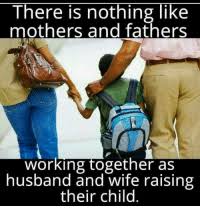
- Parents must be united in their leadership. It is vital that parents support each other in the presence of their children. Disagreements should be discussed in an “executive session” without the children present. It is important that parents are working together and making decisions that are consistent with each other.
- The parent-child hierarchy dissolves when children become adults. When children become adults, the relationship between parents and children changes. It is the stewardship of the adult children to make decisions concerning their own families. “Well-meaning relatives have broken up many a home. Numerous divorces are attributable to the interference of parents who thought they were only protecting their loved children … Live your own life (President Spencer W. Kimball, Marriage, p 17).
- The marital relationship should be a partnership. Research consistently finds that happy relationships are most likely to occur in marriages where the couple shares power and has a true partnership. “Joint decision making, sharing marital powers, perceptions of both self and partner doing a fair share of family work, and a feeling of equity appear to be positively related to marital and relationship satisfaction” (Dr. Ross Eshleman, The Family, 2003, p. 331).
- What is the power relationship in your marriage? Power is made up of two major components: 1) the process of power, where one spouse tends to dominate conversations, doesn’t listen to the other partner’s opinion, etc. and 2) power outcome, which is determined by which partner tends to get their way when there is a disagreement. “In an equal partnership, spouses continue to discuss the issue and negotiate until they agree on a decision. They both have veto power, meaning that both have to agree on the decision. In an unequal relationship . . . one partner tends to have the final say and can make decisions without the spouse’s consent or agreement” (Hudson et al., 2016, p.44).



It’s easy to understand the importance of these guidelines after experiencing what happens between a couple when a guideline is violated. Early in our marriage, my husband and I needed another vehicle. I was away at my parents’ home when my husband decided to go out car shopping with his parents. He found a car he thought I would approve of, and without discussing it with me, went ahead and bought the car. When he called me, so proud of his purchase, I was stunned, and then I was angry for several reasons. A car purchase should be discussed and should be a joint decision. And the parents of adult children need to let their children live their own lives. I resented the interference, even though I know his parents meant well. For as long as we owned that car, I hated it because it represented an inequality of power in our relationship. But it was a learning experience and that mistake was not repeated, by either of us.
Sharing power as equal partners isn’t always easy, and mistakes will be made. But as couples learn to share power and live as equal partners in their relationship, they will enjoy better marital relationships, better physical and emotional health, and better parenting and outcomes for children.

Resources
Hudson, V.M., & Miller, R.B. (2016). Equal partnership between men and women in families. In A.J. Hawkins, D.C. Dollahite, & T.W. Draper (Eds.), Successful marriages and families: Proclamation principles and research perspectives (pp. 38-48). Provo, Utah: BYU Studies.
Miller, R.B. (2008, March). Who is the boss? Power relationships in families. BYU
 Kirsten's marriage blog